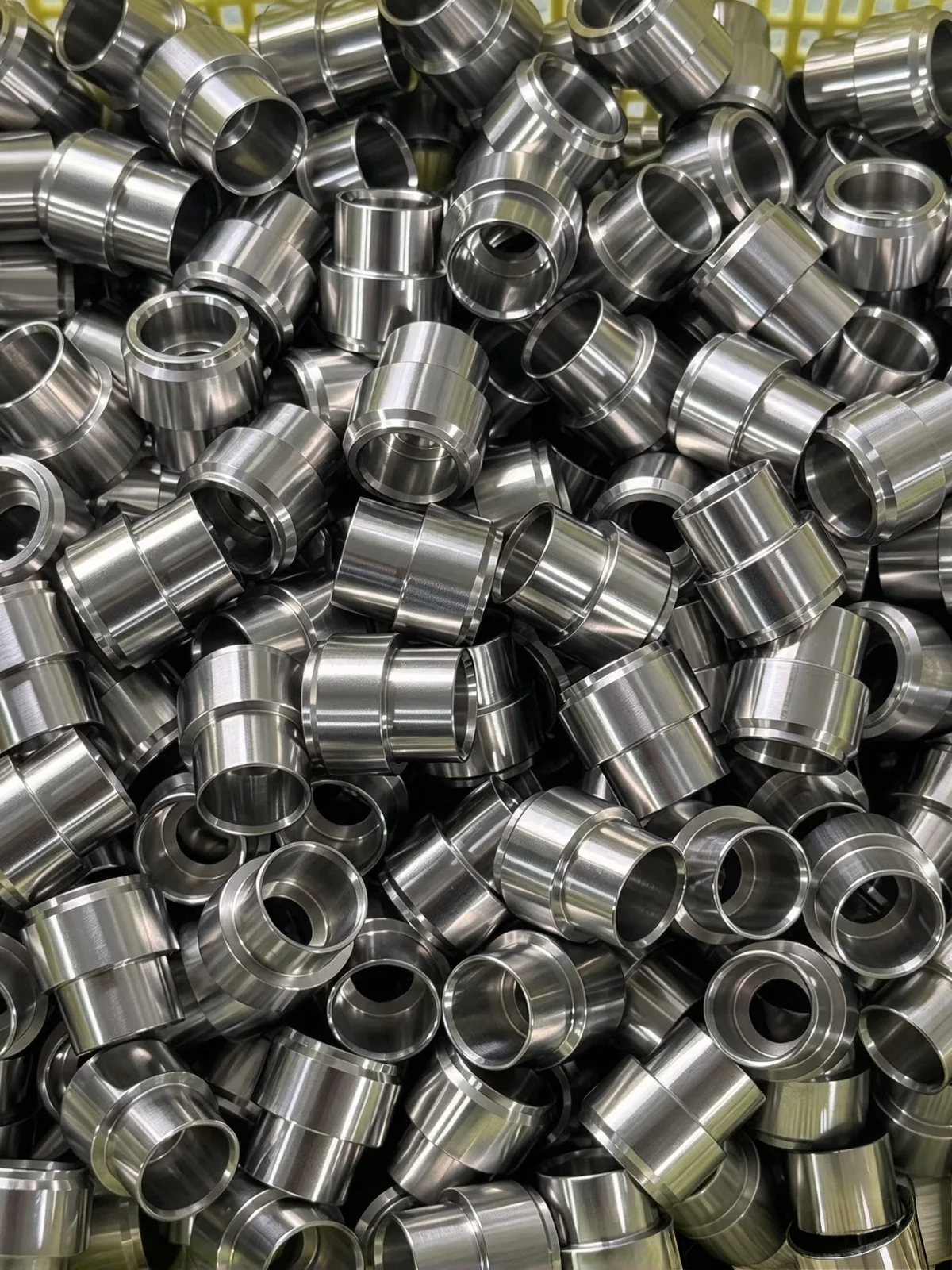
Before requesting a quote for a bushing or sleeve, decide what its inside and outside surfaces need to do. Does the bore guide a moving shaft, locate a pin or simply clear a fastener? Is the outside diameter pressed into a housing, a sliding fit or held by another part?
Those questions turn a description such as "metal sleeve, 20 mm bore" into a part that a supplier can quote. Two sleeves with the same nominal dimensions may need different fits, materials and inspection because they work differently in the assembly.
This guide is for buyers ordering custom machined bushings and CNC turned sleeves to a drawing. It covers the information that matters before sample approval and the points worth keeping consistent on repeat orders.
Start with the job of the sleeve
The names bushing and sleeve are used for several kinds of parts. A replaceable bearing surface, a locating sleeve and a rigid spacer may look similar, but their working requirements are different.
If a shaft moves inside the part, the design needs to address the mating surfaces, load, motion, lubrication and operating environment. If the sleeve is clamped between two components, its length and end faces may matter more than a close bore fit. A flanged bushing adds an axial locating face as well.
Tell the supplier which job the part performs. An assembly section or mating-part drawing can explain this much more clearly than asking for every dimension to be "high precision." The material and acceptance requirements should still be defined on the part drawing; the supplier should not have to guess them from the application.
Define the bore and both mating parts
For a bushing installed in a housing, there are two separate interfaces: the outside diameter against the housing and the bore against the shaft or pin. Specify each one. A nominal diameter without limits or a fit designation does not tell the supplier the finished size to make.
The bore may also have more than one diameter. A shoulder, counterbore or relief can limit how far another part enters. Include those depths and identify the surfaces that actually locate or support the mating component.
Where an interference fit is part of the design, agree whether acceptance concerns the free part, the installed bore or both. Assembly can affect the bore depending on the design, material and housing. A loose-part dimensional report and a trial assembly therefore answer different questions. The required fits come from your assembly design, not from a universal tolerance that suits every sleeve.
Bearing-bushing catalogues may specify the bore after fitting, as in SKF's composite bushing guide. For a catalogue part, use the selected product's mounting instructions. A custom sleeve needs its own agreed drawing and acceptance condition.
Long bores and thin walls also deserve a discussion before the price is fixed. Access for machining and measurement, workholding and distortion can affect the route. Protolabs discusses thin-wall deflection in its machinability guide. For a quotation, the useful step is to give suppliers the actual geometry and ask them to identify any features that need clarification.
Flanges, shoulders and end faces
A flange often provides the face against which another component stops. Its thickness can set an axial position, while the relationship between that face and the bore can affect how the parts sit together. Identify the locating face and any required geometric control on the drawing.
Corner details can matter just as much. A radius at the base of a flange needs clearance in the mating component. A lead-in chamfer may help with installation, but it must not remove a surface that the design relies on for support.
For stepped sleeves, give the length of each locating section rather than relying only on the overall length. If the part is used as a spacer, specify which faces are clamped and what length is required in the delivered condition. These details help the supplier separate functional surfaces from clearance areas.
Material and the condition at delivery
Steel, stainless steel and bronze are not interchangeable choices for a bushing. The grade, material condition and requirements of the mating surfaces belong in the design. If you are comparing material options, ask suppliers to quote them separately so a lower price is not based on an unapproved substitution.
Also state any heat treatment, grinding, coating or other finishing work that is part of the order. If a treatment affects a close-fitting surface, the supplier needs to plan how the final dimensions will be achieved. Masked areas, coating thickness and cleaning requirements may need to be included.
Ask for a finished-part quotation. A turned sleeve awaiting treatment or final bore finishing is a different purchase from a part ready for assembly. The offer should make that distinction clear, including any required material documents and treatment records.
Agree on inspection before approving the batch
A first sample should let you check both the drawing and the assembly. Identify the bore, outside diameters, locating lengths and other critical features in the inspection request. Where roughness or geometric controls are specified, include them in the agreed report scope.
For a close-fitting bore, ask how it will be measured and where readings will be taken. A single reading at the entrance may not answer a requirement that applies along the bore. If the installed condition matters, agree on the housing or fixture and the assembly check as well.
Repeat orders need the same drawing revision and acceptance basis as the approved sample. Decide which features require a first-article report, which are checked during production and how the batch is identified. Packing should protect the bore edges, flanges and finished surfaces from contact damage.
Preparing a bushing or sleeve RFQ
A useful RFQ brings the drawing and delivery requirements together. You do not need a long purchasing specification for every sleeve, but the supplier does need the information that affects fit and the finished condition.
| RFQ item | What to include |
|---|---|
| Drawing | Current 2D revision, units and a matching 3D model where useful |
| Interfaces | Bore, shaft and housing dimensions, fit requirements and locating faces |
| Material and finish | Grade, condition, treatment, surface requirements and final acceptance stage |
| Approval and quantity | Sample quantity, batch quantity, repeat demand and inspection requirements |
| Delivery | Packing, identification, destination and requested schedule |
Compare suppliers against that same package. If one offer excludes grinding, inspection reports or protective packing, resolve the difference before comparing the unit prices.
Sourcing custom bushings and sleeves through SARGARA
SARGARA helps overseas buyers source drawing-based machined parts in China. For a bushing or sleeve order, we can coordinate supplier review, technical questions, quotations, samples and agreed quality follow-up.
Our CNC machining capability page covers the wider range of turned and milled components. If the sleeve is being purchased with its mating shaft, see our custom precision shaft sourcing. Sending both drawings helps us discuss the interfaces with potential suppliers.
To request a quotation, send the current drawing, material, sample and batch quantities, and the checks you need with the order. Include the mating-part information when it explains a fit that the sleeve drawing alone does not define.